
Brand voice 6 min read
Why ChatGPT keeps writing copy that doesn't sound like your brand
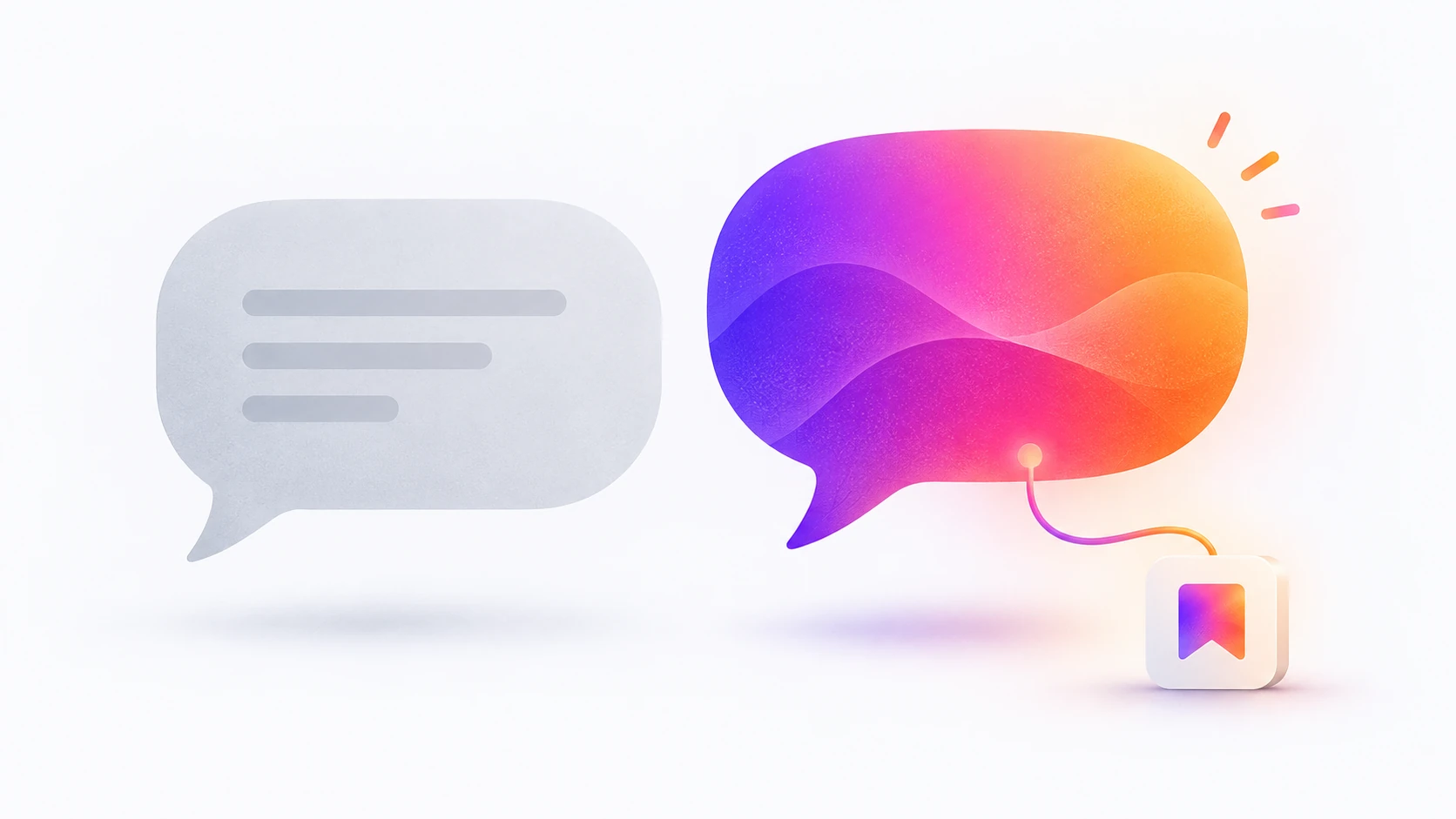
ChatGPT writes generic copy because it starts every session as a blank slate with no memory of your voice, your positioning, your proof or the words you never use. It produces the statistical average of everyone's marketing, so it sounds like everyone. The real fix is not a longer prompt, it is an AI that knows your brand and holds that knowledge across every task. Paste a brief once and it forgets by tomorrow. Teach it once and it should remember forever.
This post explains why blank-slate AI drifts off-brand, what "on brand" actually requires, and why memory beats prompting.
Why does ChatGPT sound so generic?
ChatGPT sounds generic because it has no idea who you are. It was trained to predict the most likely next word across the whole internet, so with no context it returns the most average phrasing available. Average is the opposite of a brand.
A brand is a set of specific, non-average choices. You say "members" not "users". You lead with the guarantee, not the discount. You never use exclamation marks. A blank-slate model cannot know any of that, so it fills the gap with the safe, forgettable defaults that make so much AI copy read the same.
Better prompting patches this for one message. You paste your tone notes, your audience, three approved phrases, and the next reply improves. Then the window ends, the memory clears, and the following task starts from zero again. You are not teaching the tool, you are renting a good answer by the hour.
What does "on brand" actually require?
Being on brand means matching a specific set of things the writer has to know before the first sentence. Voice is only the surface. Underneath it sit positioning, proof, vocabulary and audience, and a generic model has none of them on hand.
- Voice. Rhythm, formality, the punctuation you use and the punctuation you ban.
- Positioning. What you are, what you are against, the one idea you own.
- Proof. Real numbers, features, guarantees and outcomes, so claims are true rather than invented.
- Vocabulary. The approved terms you always use and the banned ones you never do.
- Audience. Who you are talking to and the words they actually use themselves.
Miss any one of these and the copy drifts. It might read smoothly and still call your product the wrong name, claim a statistic you never published, or address the wrong reader. On-brand is not a style setting, it is knowing the facts.
Why doesn't better prompting fix it?
Better prompting does not fix it because a prompt is temporary and a brand is permanent. You can hand a model a perfect brief, but the moment the conversation ends that knowledge is gone, and you rebuild it by hand for the next email, the next ad, the next post.
There is a ceiling on what a prompt can carry too. You will paste your top few rules, not the forty edge cases your team has learned over years. The model never sees the feedback you gave last week, the phrase a customer used in support that converts, or the ad hook that already beat the others. Prompting reaches for context you have to remember and retype. Memory holds context so you never have to.
How is an AI with brand memory different?
An AI that knows your brand stores your voice, positioning, proof and rules once and applies them to every task without being reminded. It is the difference between a freelancer you brief from scratch each morning and a writer who has worked with you for two years. Same request, very different output.
Writey is built on this idea. Its Brand Memory learns your voice, your products and your proof once, then every brief inherits it, which is what "teach it once, create everywhere" means in practice. You stop re-explaining your company and start getting first drafts that already sound like you.
The second half is the Signal Brain, which writes from your connected data rather than from generic assumptions. For any piece it pulls the evidence that matters, then grounds the copy in it.
| Blank-slate AI (ChatGPT) | AI that knows your brand (Writey) | |
|---|---|---|
| Brand knowledge | None until you paste it | Stored once, applied every time |
| Voice and rules | Reset every session | Remembered across all work |
| Proof and claims | Invented or guessed | Grounded in your real data |
| Effort per task | Re-brief from scratch | Brief once, reuse forever |
| Default output | Industry average | Yours |
The practical result is context-aware AI writing that starts on brand instead of being corrected onto it. You edit less because the draft was right about who you are before it wrote a word.
What does the Signal Brain actually read?
The Signal Brain reads the platforms you already run on, so the copy is built from evidence rather than assumption. It looks at the subject lines your email tool shows get opened, the exact words customers use in your support inbox, the ad hooks that already won, the pages that convert and the keywords worth ranking for. It ranks the most relevant of these for the task and writes from them.
This is why AI content on brand is a data problem, not a tone problem. Generic AI guesses at what your audience responds to. An AI with memory and connected signals writes from what your own numbers already prove. If you want the deeper mechanics of writing so machines quote you too, see how to get cited by AI search.
You can see the range of what this covers across the formats Writey writes, from ads and email to landing pages and blogs. It is the same brand memory feeding all of them.
Frequently asked questions
Why does ChatGPT not sound like my brand?
ChatGPT has no stored knowledge of your voice, positioning, proof or banned terms, so with no context it defaults to the average phrasing it learned from the whole internet. You can improve one reply by pasting a brief, but the memory clears when the session ends and the next task starts generic again.
Can I make ChatGPT sound on brand with a better prompt?
A better prompt fixes one message, not the pattern. Prompts are temporary and cannot carry every rule, past piece of feedback or performance signal, so you rebuild context by hand each time. An AI with persistent brand memory holds that knowledge once and applies it to everything you write.
What makes an AI actually know your brand?
An AI knows your brand when it remembers your voice, positioning, proof and vocabulary across sessions and grounds claims in your real data. Writey does this with Brand Memory, which you teach once, and the Signal Brain, which writes from your connected ads, email, support and SEO evidence. You can try it free or compare tiers on pricing.